En el marc del projecte europeu RESCUE, membres de les oficines de suport a estudiants refugiats d’universitats de Jordània, el Líban i el Kurdistan iraquià s’han reunit amb àrees de la UB i altres entitats i administracions que fan possible el Programa.
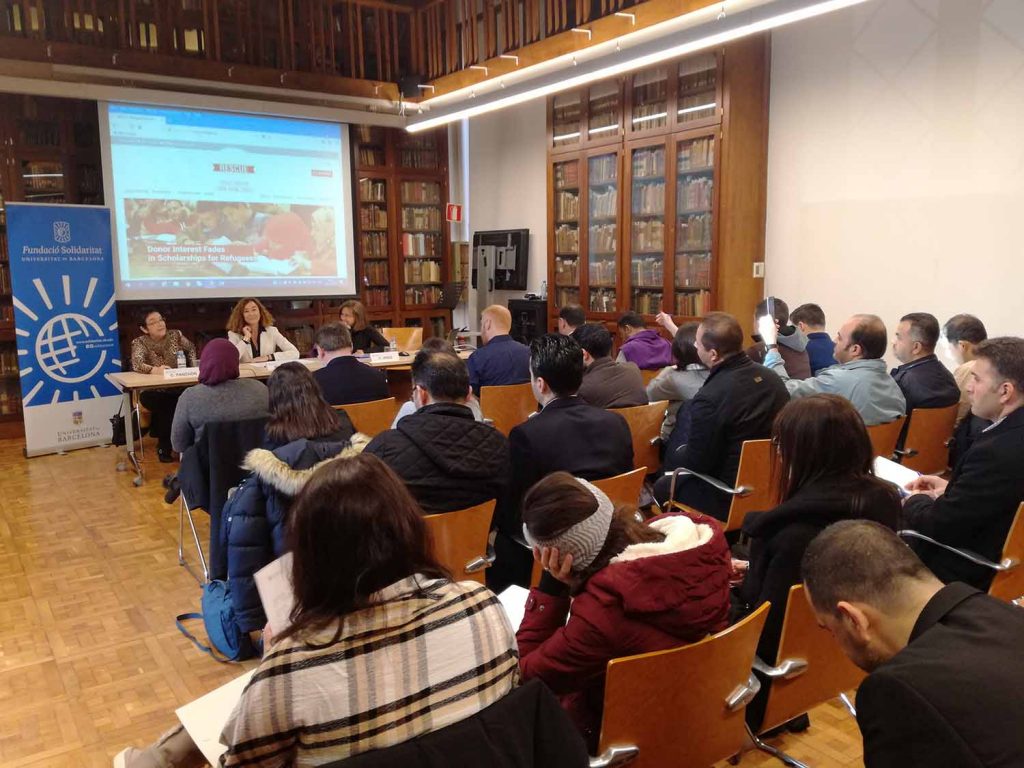 Una delegació de 24 persones d’universitats de Jordània, el Líban i el Kurdistan iraquià han visitat, del 28 al 30 de novembre, la Universitat de Barcelona en el marc del projecte europeu RESCUE, que pretén millorar l’accés de les persones desplaçades i refugiades a les universitats de l’Orient Mitjà i el Nord d’Àfrica mitjançant la creació i gestió d’oficines de suport ad hoc. Aquestes oficines entraran en funcionament a les universitats de Zarqa, Al-Zaytoonah i Yarmouk (Jordània), Lebanese University i USEK (Líban), i Universitat de Duhok i Universitat Politècnica de Duhok (Iraq).
 Una de les accions del projecte RESCUE ha estat la visita d’estudis de membres d’aquestes oficines a la Universitat de Barcelona per conèixer com es desenvolupen i gestionen les accions del Programa de suport de la UB a persones refugiades i provinents de zones en conflicte.
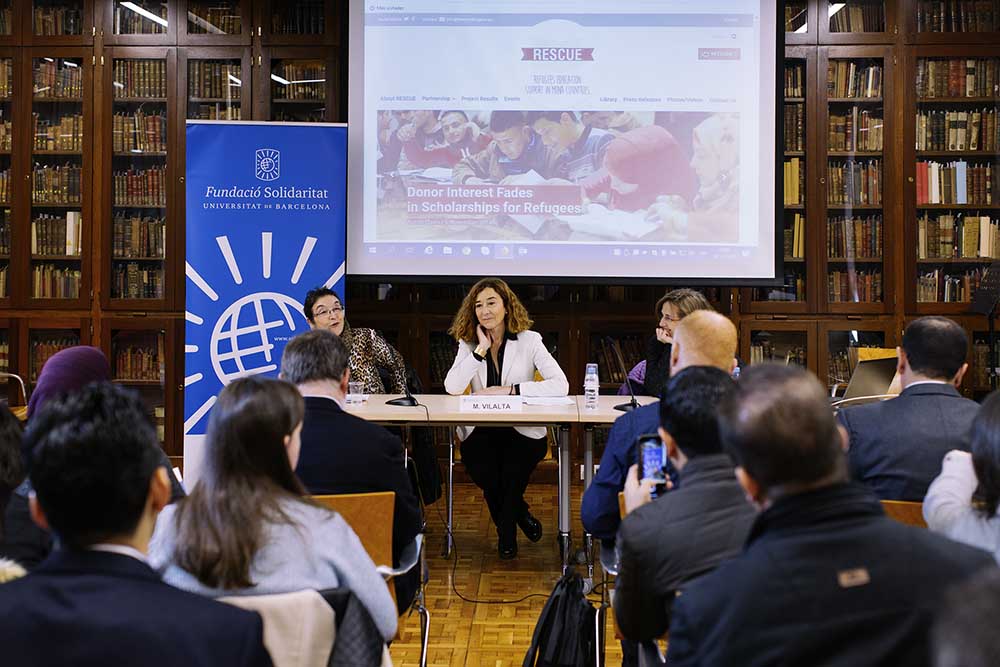
El 28 de novembre la delegació ha estat rebuda per la vicerectora d’Igualtat i Acció Social de la UB, Maite Vilalta; la responsable acadèmica del projecte RESCUE a la UB, Carme Panchón, 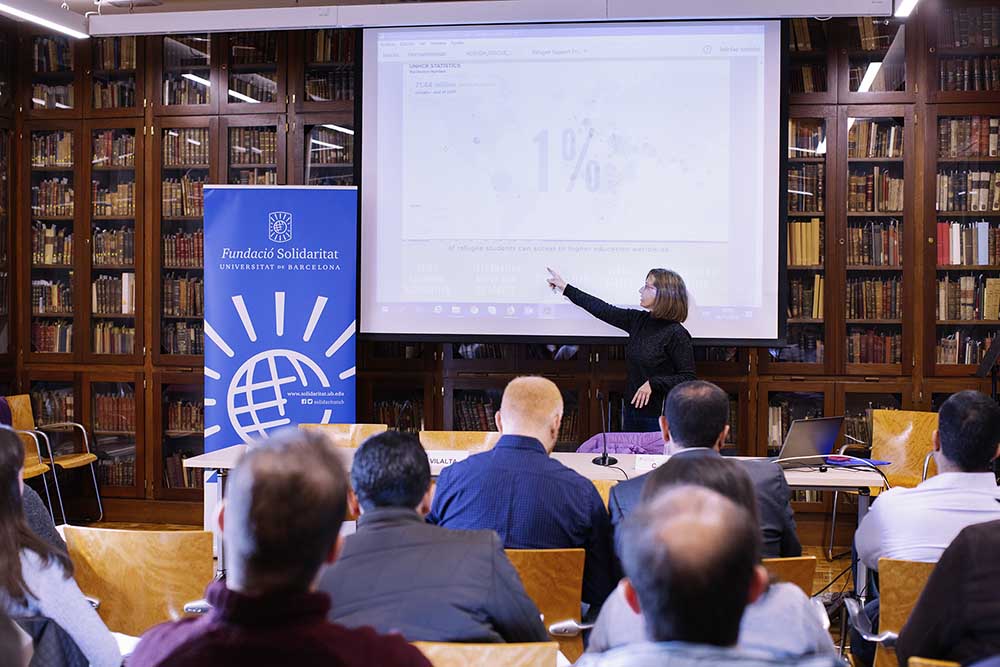 i la coordinadora del Programa de suport de la UB a persones refugiades, Cati Jerez.
La vicerectora ha destacat que tant aquest Programa com la participació de la UB al projecte RESCUE s’emmarquen en el compromís de la Universitat de Barcelona de defensar els drets humans i contribuir a la consecució dels Objectius de Desenvolupament Sostenible (ODS) de l’Agenda 2030 de les Nacions Unides, la qual es basa en la filosofia de «no deixar ningú enrere».
Sobre aquest punt, Cati Jerez ha recalcat que la raó de ser del Programa de suport de la UB i del RESCUE és que, segons dades de les Nacions Unides, només un 1 % de les persones refugiades en edat universitària tenen accés a la universitat, mentre que la mitjana mundial és del 36 %.
El Programa de la UB, que actualment dona cobertura a 28 persones i que en el proper any n’albergarà 15 més, es desenvolupa en coordinació amb diversos actors de la Universitat de Barcelona i en cooperació amb ONG i administracions locals, supramunicipals i autonòmiques.
La visita d’estudis
En el marc de la visita d’estudis, durant el matí del 28 de novembre s’han presentat les línies generals del Programa de la UB, i les seves accions de seguiment i suport emocional. A més, estudiants de la primera edició del Programa han explicat la seva experiència. A la tarda, els representants universitaris de l’Orient Mitjà s’han reunit amb estudiants de la segona edició del Programa en un dels col·legis majors de la UB on s’allotgen, i on el cap d’estudis ha explicat la tasca d’integració social que es realitza amb l’alumnat. Igualment, la mateixa tarda, la delegació de representants universitaris s’ha trobat amb membres d’ACATHI, una de les entitats especialitzades en refugi que col·labora amb el Programa de la UB en matèria d’allotjament i de suport a les persones acollides.
En el segon dia de la visita, el 29 de novembre, el grup ha rebut informació sobre el sistema d’asil a Espanya per part del Centre d’Informació per a Treballadors Estrangers (CITE) de CCOO de Catalunya, que col·labora amb el Programa de la UB en l’àmbit de l’assessorament legal. Els representats universitaris han conegut les dinàmiques de reassentament del Govern espanyol segons la ruta d’arribada de les persones desplaçades, així com una novetat molt recent de la llei espanyola (pendent de reglamentació) que permetria que estudiants de màster i doctorat poguessin entrar al país sense necessitat de visat d’estudis. A continuació, la delegació ha mantingut una reunió institucional amb Ignasi Calbó, coordinador del programa Barcelona Ciutat Refugi de l’Ajuntament de Barcelona, amb què la UB té un conveni de col·laboració per al desenvolupament del curs de transició als estudis de grau i formació en drets humans i cultura de pau, dins del Programa de suport a persones refugiades.
El darrer dia de la visita, el 30 de novembre, s’ha centrat en trobades amb diferents actors de la UB que fan possible el Programa: estudiants de la Facultat de Psicologia que han participat en les pràctiques d’acompanyament psicosocial; membres de l’equip de Gestió Acadèmica, amb què s’ha establert un protocol de reconeixement d’estudis previs; membres de l’Oficina de Mobilitat i Programes Internacionals (OMPI), amb què es tracten casuístiques relacionades amb estudiants Erasmus Mundus; professorat de la Facultat d’Economia i Empresa, amb què s’ha elaborat un Pla d’Acció Tutorial (PAT), i professorat del curs de transició als estudis de grau, que ha implementat una metodologia específica d’ensenyament dels idiomes català i castellà dissenyada per Serveis Lingüístics.
El projecte RESCUE (Refugees Education Support in MENA countries)
El projecte RESCUE, de tres anys de durada (2016-2019), està cofinançat pel programa Erasmus + per a l’enfortiment de capacitats en el camp de l’educació superior, i el coordina la Unió d’Universitats del Mediterrani (UNIMED), de què la Universitat de Barcelona forma part.
Aquesta notícia té relació amb els següents ODS de l’Agenda 2030: