La ponència de Fredj marcarà l’inici d’un conveni de col·laboració entre el Mémorial de la Shoah i l’EUROM de la Fundació Solidaritat UB.
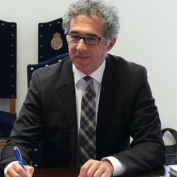
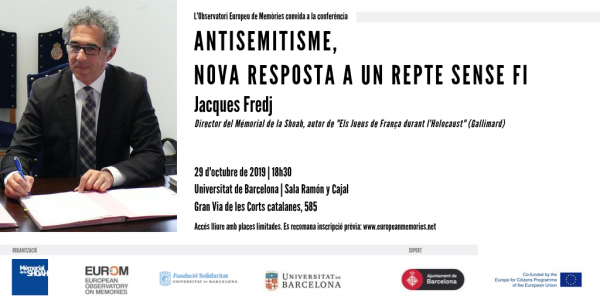 El director del Mémorial de la Shoah de París, Jacques Fredj, oferirà, el 29 d’octubre de 2019 a la Universitat de Barcelona, la conferència «Antisemitisme, nova resposta a un repte sense fi», en el marc de la signatura d’un conveni de col·laboració entre el Mémorial de la Shoah i l’Observatori Europeu de Memòries (EUROM) de la Fundació Solidaritat UB.
L’acte és obert al públic i se celebrarà a les 18:30 hores a la Sala Ramón y Cajal de l’edifici històric de la UB (Gran Via de les Corts Catalanes, 585). L’accés és lliure, però les places són limitades i es requereix inscripció prèvia a través d’aquest enllaç.
El conveni
L’EUROM – xarxa multidisciplinària i transnacional de polítiques públiques de memòria impulsada per la Fundació Solidaritat de la Universitat de Barcelona – i el Mémorial de la Shoah de París formalitzaran un conveni de col·laboració amb l’objectiu de promoure els usos del passat per afrontar conflictes socials actuals, en especial el racisme, la xenofòbia i l’antisemitisme. L’acord consolida una cooperació que va començar ara fa dos anys amb la formació de professorat i professionals de l’educació a Catalunya i Portugal per tractar a les aules els temes de l’Holocaust, els genocidis i les atrocitats massives.
El Mémorial de la Shoah i Jacques Fredj
El Mémorial de la Shoah és una institució activa en recerca, documentació, publicació editorial, docència, formació i mediació cultural. Els seus orígens es troben en un arxiu clandestí creat l’any 1943 per l’industrial d’origen rus i membre de la resistència Isaac Schneersohn amb l’objectiu de reunir evidències sobre la persecució dels jueus. Un cop alliberada França, l’arxiu es va convertir en el Centre de Documentació Jueva Contemporània (CDJC) i va ser una peça fonamental per donar suport a les declaracions franceses en els processos de Nuremberg i posteriorment en els judicis a responsables i còmplices de la solució final a Alemanya, França i Israel.
La seu de l’actual Mémorial de la Shoah a París va ser inaugurada l’any 2005 al mateix lloc on Schneersohn havia fundat l’any 1956 el Memorial al Màrtir Jueu Desconegut. Classificat com a monument històric el 1991, en aquest espai destaca el Mur dels Noms, on hi ha gravats els noms dels més de 70.000 jueus de França deportats, i acull cada any les principals cerimònies relacionades amb la Shoah a l’Estat francès. L’espai també acull l’arxiu del CDJC i una biblioteca, una exposició permanent sobre les deportacions, exposicions temporals, i esdeveniments culturals. El 2012, el Mémorial de la Shoah va obrir un museu a Drancy, davant l’antic camp d’internament de la ciutat de Muette.
Director del CDJC des del 1992 i del Memorial al Màrtir Jueu Desconegut des del 1996, i actual director del Mémorial de la Shoah a París, l’historiador Jacques Fredj és autor de Les Juifs de France dans la Shoah (Els jueus de França durant l’Holocaust), coeditat per Gallimard i el Mémorial de la Shoah, i Drancy, un camp d’internement aux portes de Paris (Drancy, un camp d’internament a les portes de París), publicat per edicions Privat.
L’Observatori Europeu de Memòries (EUROM)
Creat l’any 2012 amb el suport de la Comissió Europea, l’Observatori Europeu de Memòries (EUROM) aposta pel reconeixement de la diversitat de memòries. En aquest sentit, i mitjançant la promoció de projectes transdisciplinaris, transversals i transnacionals, l’EUROM té com a objectius identificar i analitzar la diversitat dels processos memorials tant a Europa com en altres continents; promoure la discussió per crear polítiques públiques representatives i contribuir a analitzar-les i gestionar-les; fomentar la socialització de les iniciatives memorialistes i les connexions reals entre institucions, professionals i investigadors. Actualment, la xarxa inclou 50 institucions i grups de recerca d’Europa i Amèrica.
Aquesta notícia té relació amb els següents ODS de l’Agenda 2030: