The new report published by this European project, in which the UB Solidarity Foundation takes part, will contribute to designing better and sustainable reuse systems in rural areas of the SUDOE region.
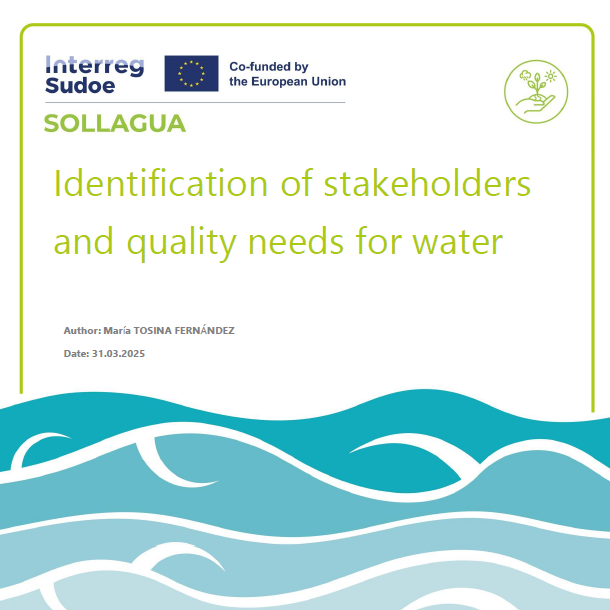
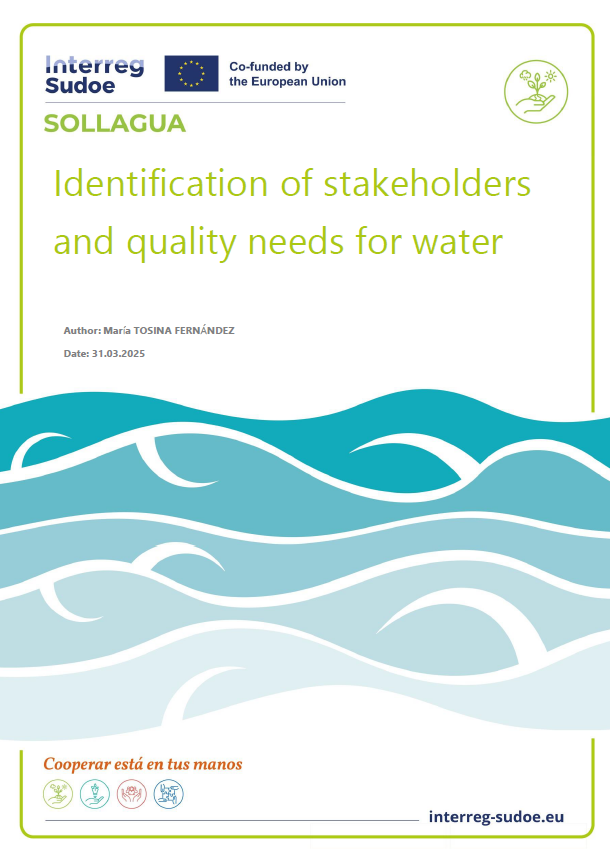
The European project SOLLAGUA, of which the UB Solidarity Foundation is part, has published the report Identification of Stakeholders and Quality Needs for Water. This document identifies who uses reclaimed water in rural areas of southwestern Europe and what quality they need: a key step to designing better and sustainable reuse systems in the SUDOE region, which includes Spain, France and Portugal.
The publication includes a review of the Spanish, French and Portuguese context; an evaluation of stakeholders needs through living lab workshops; the results of a survey to these same groups; a section on needs identified across the SUDOE region, and the conclusions.
According to the report, stakeholders in the three countries agree on several issues: the lack of public confidence in the safety of reclaimed water; the complexity of administrative processes involved with the access to recycled water; the need to make an effort to incentivize the use of this type of water (for example, through grants, and to replace drinking water whenever possible), and the importance of preserving and protecting the environment, as well as natural water resources.
Given that the project follows a fit-for-purpose approach to water reuse, this document is of great scientific value for all those initiatives developed in the same line of research as SOLLAGUA.
The UB Solidarity Foundation and sustainable water management
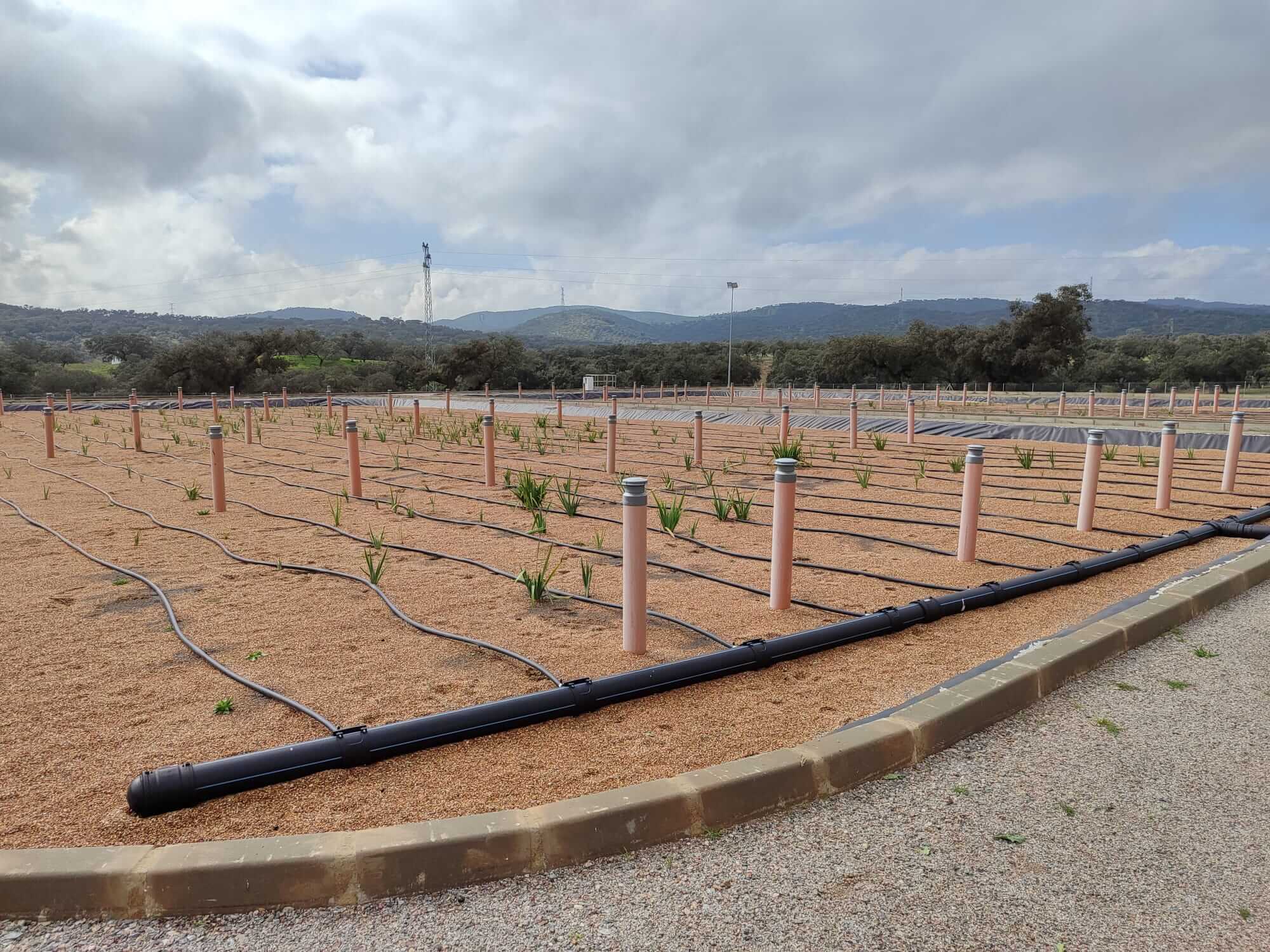
The Solidarity Foundation of the University of Barcelona has extensive experience in WASH (Water, Sanitation and Hygiene) projects, which promote nature-based solutions for the sustainable management of water resources.
The SOLLAGUA project is a three-year initiative co-funded by the Interreg SUDOE 2021-2027 program that seeks nature-based solutions (NBS) for water reuse in rural areas of Spain, France and Portugal.
Currently, in addition to the this project, the Foundation participates in the LIFE4Zoo project, funded by the LIFE program of the European Union, which promotes NBS so that the zoos of Barcelona and Liberec optimize the use of water.
On the other hand, in Senegal, together with the Gaston Berger University (UGB) of Saint-Louis and Món-3, the UB Solidarity Foundation is working on the implementation of low-cost, sustainable and environmentally friendly technologies for the sustainable management of wastewater and sanitation services in the Saint-Louis region; including the installation of an ecological wastewater treatment plant on the UGB campus.

Likewise, in Palestine, together with the Catalan Association for Peace (ACP), the UB Solidarity Foundation contributes to the training of women’s farmer cooperatives in areas such as water management. Meanwhile, in Southeast Asia, it has developed training programs on water resources in six universities and contributed to integrating nature-based water treatment technologies in six cities. In fact, more than 10 years ago, with the National University of Vietnam, the UB Solidarity Foundation created an industrial wastewater treatment plant with ecological systems in Hạ Long Bay, which was the first infrastructure of its kind (Constructed Wetlands) in Southeast Asia.